

Article
10 min read
Data is everywhere—you’re surrounded by it, even reading this right now. But data isn’t the same for everyone. For you, it might be a few numbers in a report or some files on your laptop. For retailers and eCommerce companies, it’s something much heavier: constant streams of information from websites, mobile apps, in-store systems, social media, sensors, and third-party tools.
Big Data came in as a way to make sense of all this noise, helping retailers see patterns, personalise deals, and make smarter choices instead of relying on “best guesses”. Done right, Big Data in retail turns scattered signals into a clearer story about how people actually shop.
Do Big Data and regular data work the same? (Not really.)
Big or small… it’s data that counts, isn’t it?
Not exactly.
It’s tempting to believe all data has the same value, but once you look at how retailers actually use information, the differences become obvious. Innovation is actually meant to solve real problems. The trouble is, buzzwords often sell faster than clarity, so people end up buying “AI-powered” tools without understanding what their data actually means or how it shapes decisions.

Before using Big Data, you need to understand what it is and what it isn’t. The difference matters more than people think.” — Iulian Ciobanu, Integrated Solutions Advisor | EBS Integrator
What’s the difference between Big Data and regular data in retail?
Regular data: small, structured, predictable
Regular data is the simple, familiar kind — the Monday sales report, the clean spreadsheet tracking your monthly budget, or a CSV export from your POS system. It’s:
small
structured
easy to manage with basic tools
You can read it, filter it, and understand it without needing an engineer in the room.
Big Data: large, fast, and coming from everywhere
Big Data in retail is different. It’s massive, constantly changing, and comes from many independent streams:
social media
online transactions
mobile app behaviour
IoT devices
in-store sensors
customer reviews and videos
You can’t scroll through Big Data. You have to process it, clean it, and connect it before it starts making sense.
What are the 3 V’s of Big Data in retail?
The 3 V’s explain why Big Data is powerful but difficult to manage: Volume, Velocity, Variety.
Volume — too much for manual analysis
Retailers deal with huge amounts of information:
millions of transactions
customer profiles
browsing and app behaviour
campaign logs
You can’t “eyeball” your way through this. At some point, Excel stops being a strategy.
Velocity — data that changes in real time
Big Data moves fast. New information appears every second:
product views
cart updates
stock changes
reviews and comments
interactions during campaigns
If you only review reports weekly or monthly, you’re already behind.
Variety — not everything looks like a spreadsheet
Retailers work with:
structured data (transactions, inventory)
semi-structured data (events, logs)
unstructured data (reviews, images, social posts)
This mix is what makes insights richer — but also what forces retailers to use tools that can handle more than neat rows and columns.
The 3 V’s show that Big Data isn’t just “more data.” It’s a combination of size, speed, and diversity that requires a different approach to storage, analytics, and decision-making. Mariana Dicusari, IT Systems Business Analyst | EBS Integrator
Where does Big Data in retail come from?
Now that the difference between regular data and Big Data is clear, the next question is: where does all this Big Data actually come from?
In retail and eCommerce, Big Data mostly comes from three main sources — each feeding new signals into your system every second: transactional data, social data, and third-party integrations.
These sources are what give Big Data its volume, velocity, and variety.
1. What is transactional data in retail?
Transactional data is generated every time a customer buys something. It’s structured, reliable, and one of the strongest indicators of real behaviour because people “vote with their money” rather than with opinions. It usually includes:
buyer IDs
timestamps
payment methods
products purchased
quantities and prices
fulfilment details
This type of data answers questions like:
What do customers buy most often?
How does demand shift depending on time or season?
Which products drive repeat purchases?

Every transaction is a piece of the puzzle. When you analyse them collectively, they reveal patterns you’d never see manually. — Mariana Dicusari, IT Systems Business Analyst | EBS Integrator
2. What is social data in retail?
Social data comes from platforms like Instagram, TikTok, YouTube, and Facebook. It’s messy, unstructured, and emotional — but that’s exactly what makes it powerful. Social data includes:
likes, comments, shares
hashtags and mentions
reviews and stories
images and user-generated content
sentiment (positive, neutral, negative)
Retailers use social data to discover:
emerging trends before they hit sales
what customers actually think about products
which campaigns resonate and why
how influencers affect decision-making
Customers often reveal their preferences online long before they show up in transactions. This makes social data the early-warning system of Big Data in retail.
3. What are third-party integrations in retail analytics?
Internal data alone tells only part of the story. To understand market reality, retailers supplement it with third-party data sources, such as:
competitor pricing and assortment
market trends and industry benchmarks
demographic and geographic insights
product availability across marketplaces
macro behaviour patterns from external vendors
Third-party integrations help answer:
Are we priced correctly?
Are we following the right trends?
Is our target audience changing?
Combined with transactional and social data, this creates a complete view of your customer + your competition + your market — essential for modern retail decisions.
How do retailers use Big Data in practice?
So, now that we know where Big Data comes from, the real question is: how do retailers actually use it? They’re not collecting all that information just to stare at dashboards—it’s their way of making shopping easier, smarter, and more personal (and yes, to stop guessing).
In our work, most Big Data in retail and eCommerce use cases fall into three buckets:
Personalised, omnichannel experiences
Mobile-first marketplaces
Cleaning messy data so decisions stop being emotional and start being evidence-based
Let’s look at how that works in real projects.
1. Personalised omnichannel experience
When we partnered with Lensa, a Romanian optical retailer, the goal was simple to explain but complex to execute: make online and in-store shopping feel like one continuous experience.
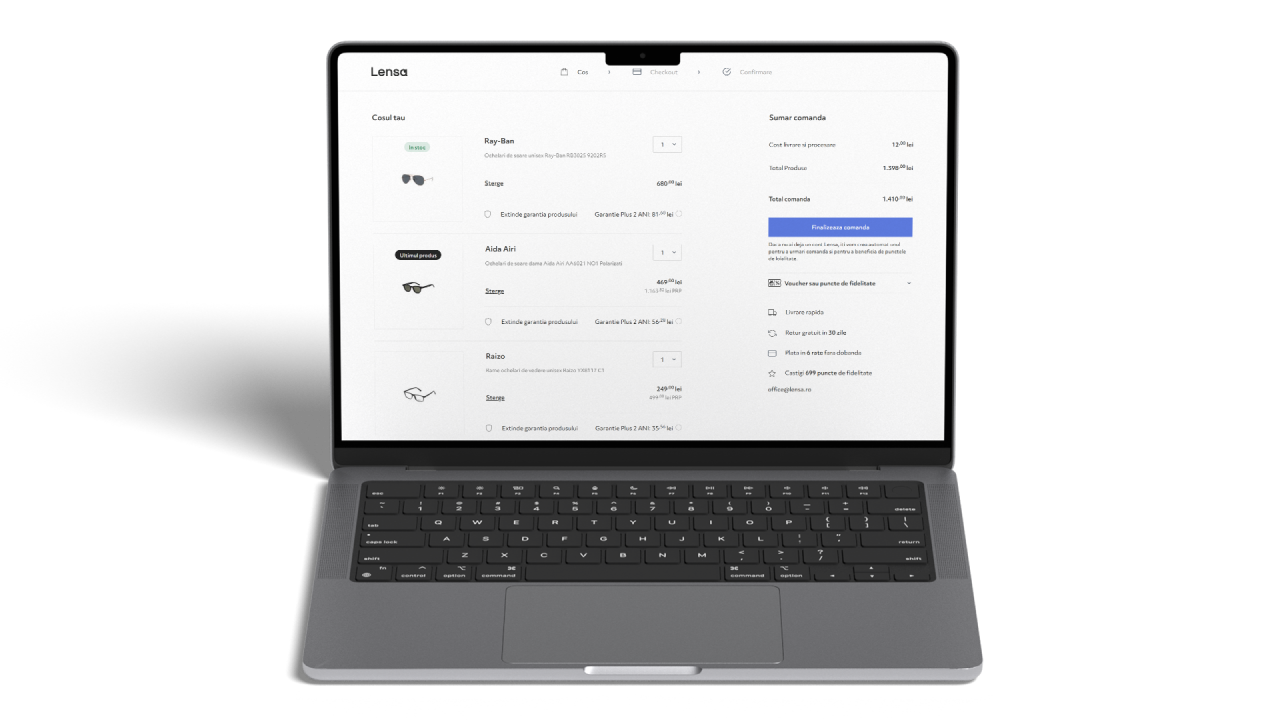 We used customer data from the mobile app and website together with in-store activity to:
Suggest products based on browsing, purchases, and preferences
Keep promotions aligned across app and physical stores
Reduce friction at checkout so people could finish faster (and abandon less)
Third-party integrations help answer:
Are we priced correctly?
Are we following the right trends?
Is our target audience changing?
By analysing app usage, in-store visits, and purchase histories, we saw clear behaviour patterns (for example, customers browsing frames online before buying in-store). Based on that, we tuned recommendations, streamlined the checkout flow, and synced promotions across channels.
2. Mobile-first marketplace
With Kupatana, operating in African markets, we had a different challenge: no local physical presence and very specific user conditions. We couldn’t assume anything; we needed the data to tell the truth.
Using traffic analytics and interaction data, we saw that:
Mobile devices generated well over half of web traffic
Users often had unstable connectivity
Fast, simple flows outperformed anything heavy or “fancy”
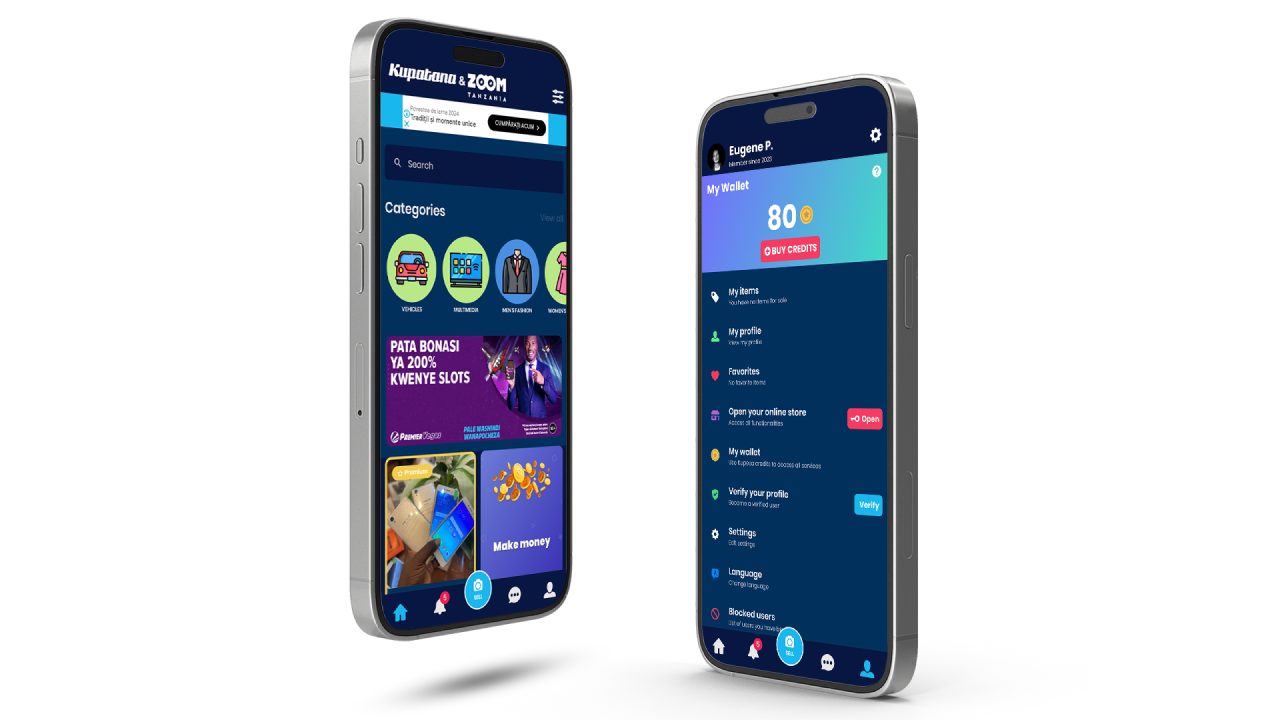 That pushed us toward a mobile-first, Big Data-driven eCommerce experience:
A clean interface focused on speed and clarity
Flows designed to work in low or unstable connectivity (offline-friendly behaviour where possible)
Ongoing monitoring of drop-off points and high-engagement screens to prioritise improvements
In other words, data told us what people could actually use—not what looked nice in a design file—and we rebuilt around that.
3. Cleaning messy data for better decisions:
Sometimes the main problem isn’t “we don’t have enough data” but “we have too much and none of it matches.”
For Global Database, a B2B data provider, the challenge was to turn many disconnected data sources into something you can actually base strategy on. Think about the retail analogy here: multiple systems, fragmented records, no single source of truth.
We used NLP and data engineering to:
Standardise company profiles and locations
Build a centralised data lake
Enable precise segmentation and richer customer views
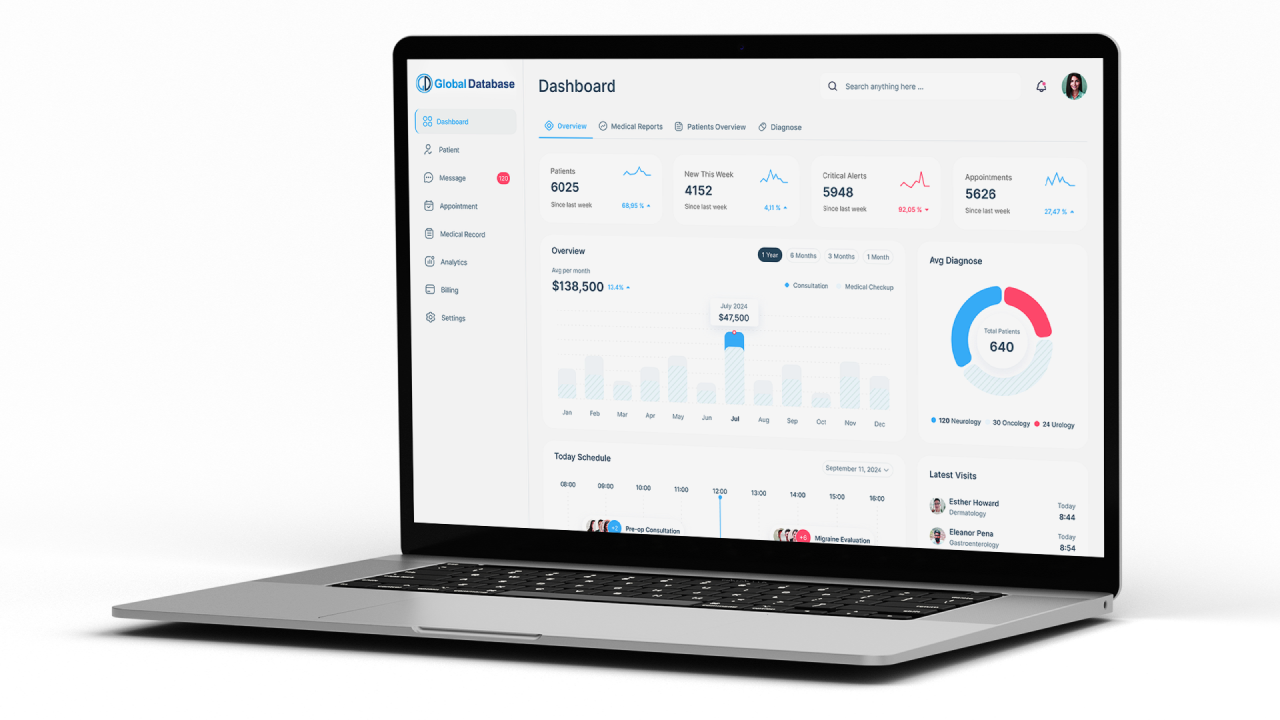 That opened the door to:
Better audience targeting
Smarter pricing and packaging
Identifying gaps for new services and offers
Retailers face the same type of problem when they try to merge transactional data, social data, and third-party data. Once it’s cleaned and connected, campaigns stop being “let’s hope this works” and start looking like “we know exactly who this is for and why.”
Why Big Data matters for retail and eCommerce now
Big Data is no longer a “nice to have experiment.” For modern retail and eCommerce, it’s the backbone of how you:
Understand what customers actually do (not just what they say)
Decide what to sell, where, and at what price
Build experiences that feel intuitive instead of random
Every transaction, click, scroll, and interaction is a signal. Combined with third-party insights and processed correctly, these signals become direction: where to invest, what to fix, and what to stop doing.
Changing post-pandemic behaviour only made this more urgent. Customers move between channels quickly, expectations are higher, and competition is rarely local. With Big Data in retail and eCommerce, you don’t need to guess your next move—you can read it from the way people are already interacting with your business.
And that’s where our work comes in: helping teams turn “we’re drowning in data” into “we know what to do next.”
Share this article on:
Explore more

Article
Regulatory & Compliance Advisory
Business Strategy & Growth
8 min read
Learn what an eCommerce audit includes and why EU-linked retailers need it in 2025. Covers security, PCI DSS, ISO 27001, SCA, fraud risk, and business continuity.
01 Dec 2025

Article
Business Strategy & Growth
Data Analytics & AI
Technology Strategy
6 min read
Discover how omnichannel strategies and AI-driven personalization help retailers connect online and in-store experiences, improve operations, and keep shoppers coming back.
07 Feb 2025

Article
Data Engineering
Retail & Consumer Goods
7 min read
Discover how Augmented Reality (AR) is transforming retail by allowing customers to try products before they buy. Learn how AR enhances customer experience, reduces returns, and increases sales for businesses.
07 Feb 2025

Article
Data Engineering
Retail & Consumer Goods
6 min read
Find out how technology-driven personalization x AI creates closer relationships with customers.
07 Feb 2025