

Article
7 min read
Whether you're building a new product or updating your existing systems — how you deliver it matters just as much as what you build. DevOps ensures your platform launches without delay, recovers quickly when something breaks, and scales predictably as more people start using your service. It keeps your systems responsive under pressure — whether you’re facing a traffic spike, expanding to new markets, or rolling out weekly updates
Watch Ion Aremescu, Infrastructure CTO and Ștefan Cojocar, DevOps Engineer break down how we apply it in our projects↑
To be more precise. DevOps aligns your digital operations with your business pace, helping you avoid budget overruns and unnecessary team stres
We understand that technology can sometimes feel overwhelming, but we're here to tell you that DevOps isn't just for tech experts. It's a practical approach that can help you roll out updates faster, fix issues before they even come up, and keep your systems stable as you grow. It's like a magical assistant that turns digital plans into useful tools, saving you from those expensive manual tasks.
Many digital transformation projects fail despite strong tech teams because of poor delivery processes. DevOps fills this critical gap
At EBS Integrator, DevOps helps us pass audits, recover from incidents, and maintain stability under pressure. Below, Ion and Ștefan explain how this works practically.
What most get wrong about digital transformation
Digital transformation isn’t about stacking up new tools or hiring a bigger dev team. We’ve seen companies with brilliant developers and solid code still fail to deliver — not because the product didn’t work, but because it never made it into users’ hands on time.
We’ve seen it repeatedly:
- E-commerce platforms that crash the moment seasonal traffic hits.
- NGO that work in testing, yet less when it comes to real-world traffic.
- Institutions waiting weeks between finished features and actual releases.
“DevOps fixes this by aligning development, operations, and business goals into a repeatable, predictable delivery cycle.” — Ștefan Cojocar, DevOps Engineer
The problem isn’t the technology — it’s the gap between building and launching. Without a stable, automated delivery process, great code becomes a liability instead of an asset.
Making delivery boring (in a good way)
When delivery becomes predictable, chaos disappears. No more 2AM firefighting. No more “it works on my machine.” No more scrambling before launch.
That’s the real power of DevOps: creating a system that works the same way, every time, across every environment. Instead of jumping between teams, delays, and manual steps — every part of the process runs through a controlled loop: build, test, deploy, monitor, improve.
It’s not about moving fast and breaking things. It’s about delivering fast — without breaking anything at all.
- No more hand-configured servers — infrastructure is written as code and reused
- Updates roll out weekly, not quarterly — with rollback built in
- Tests and scans happen automatically before anything goes live
“With DevOps, we don’t manually rebuild environments. For a call analytics platform, we run three synchronized instances across zones. One stays live. The others spin up weekly for audits and then shut down — clean, cost-effective, safe.”— Ion Aremescu, Infrastructure CTO
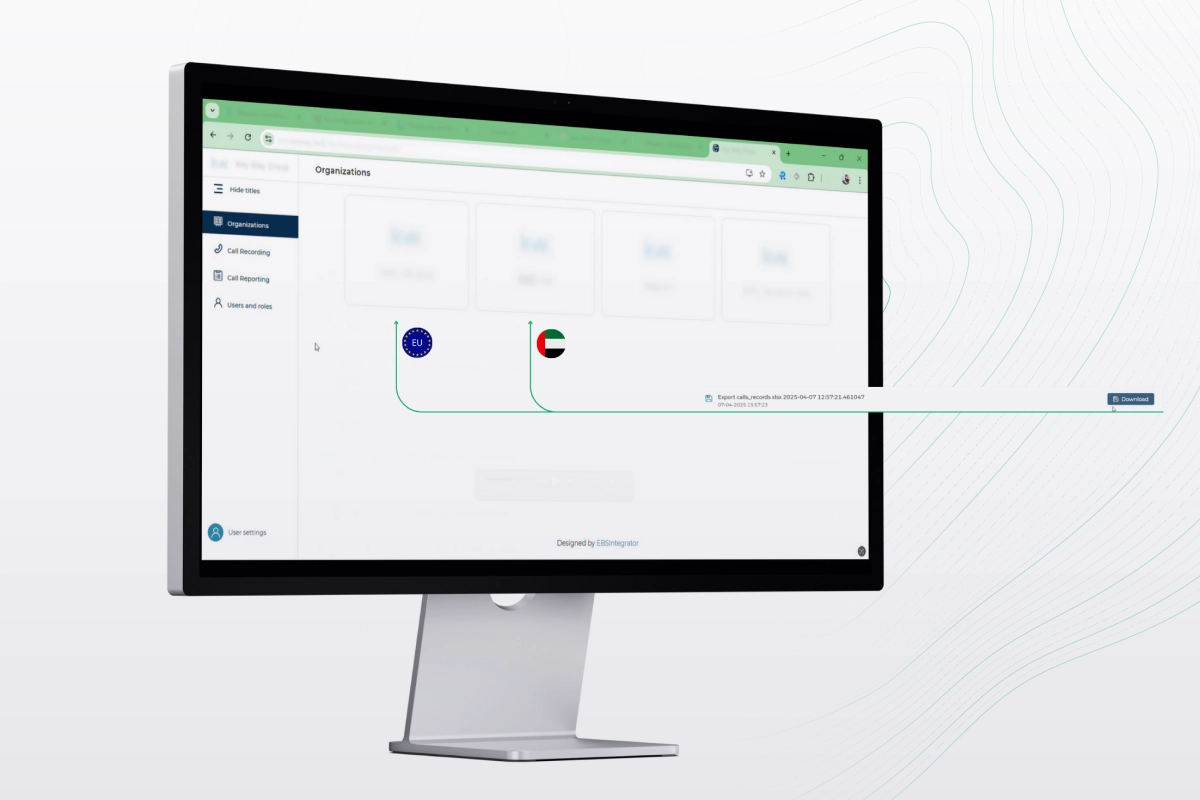
Figure 1. Call Analytics project — multi-org architecture with fully separated environments for each zone, supporting safe CI/CD operations.
And once that loop is in place, your team doesn’t have to wonder how an update gets delivered. It just does — quietly, safely, and exactly as expected. That’s when delivery becomes boring in the best possible way: stable, secure, and invisible to the user.
What you actually get from DevOps
Once DevOps is integrated, the advantages multiply rapidly. It allows businesses to reduce costs, move faster with confidence, and scale efficiently.

Figure 3. Our Engineers and DevOps teams collaborating on delivery flow, performance checks, and system monitoring.
“DevOps isn’t about rushing—it’s about control. You move fast confidently because everything is tested and ready to scale.” — Ștefan Cojocar, DevOps Engineer
Here’s what it looks like in practice:
- Speed: Frequent, smaller updates released weekly or daily through automated CI/CD pipelines.
- Stability: Reduced risks and rapid rollback from smaller releases.
- Scalability: Automatic system growth to meet demand spikes without waste.
- Security: DevSecOps ensures every update is security-scanned and validated. After a cyberattack, Parents’ infrastructure was fully rebuilt within hours.
- Savings: Cost-efficiency by only using required resources. KWG’s automated weekly refresh significantly reduced cloud expenses.
What's going on behind the scenes?
Regardless of the sector — retail, public services, or finance — the demand is the same: digital services must perform flawlessly, every time. That’s why DevOps has become a core discipline at EBS Integrator. It’s not about a one-size-fits-all toolkit, but about adapting the principles of stability, speed, and security to the realities of each client’s business.
We apply DevOps across diverse scenarios:
1. Financial Services / Business Intelligence
For a call intelligence platform operating across Europe and the Middle East, we maintain three synchronized infrastructures. The primary instance runs continuously to process and route live call data, while two secondary environments sync weekly for audits, QA, and disaster recovery drills. Databases are automatically synchronized, duplicate records are purged, and compute resources are only consumed during sync operations. This setup ensures compliance, supports regular audits, optimizes cloud spend, and keeps mission-critical services running without interruption.
2. Education
For a large-scale education platform, stability was really important. Shortly after launch, an early cyberattack encrypted the database with a ransom demand. Yet, we had prebuilt DevOps recovery scripts, thus we restored operations within minutes — before the attack could impact the live platform. The infrastructure is now self-recovering, auto-monitored, and secured against future incidents.
3. Government (Anonymized)
3.1 In one case, the client was building their own local data center. We set up both production and development environments in advance, using automation so the entire setup could be migrated later with identical configurations — no manual rework, no last-minute errors.
3.2 In another, we implemented a hybrid model: large volumes of non-real-time data are processed on-premises for cost efficiency, while time-sensitive, client-facing services run in the public cloud (GCP). This approach meets strict compliance requirements while balancing cost, control, and performance.
4. Communications / Business Intelligence
For a cross-platform caller ID and contact management app serving millions of users, DevOps pipelines helped the platform pass a full security audit with only minor recommendations. Security scans via SonarQube — automated through ArgoCD — check every commit in GitLab, producing error reports before deployment and ensuring code quality, uptime, and resilience at scale.

“Launching reliably matters as much as launching quickly. DevOps adapts to each business case without rewriting rules every time.” — Ștefan Cojocar, EBS Integrator
It’s about stakes, not sectors. NGOs handling donations, banks managing sensitive data, logistics firms coordinating teams—all need reliable, responsive systems. And DevOps can provide that sense of security.
You can’t predict the future, fortunately you can prepare for it
The way we deliver today won’t be the way we deliver tomorrow. DevOps, as we know it, is moving beyond automation into something sharper, faster, and far more proactive.
Soon, AI will work alongside your delivery pipelines — spotting issues before they appear, suggesting fixes, and even deciding when it’s safe to release. Imagine launching updates not just faster, but with the quiet certainty that every possible risk has already been checked.
SERVERLESS PLATFORMS will make “capacity planning” a thing of the past. Need to scale overnight? Cloud services like AWS Lambda will simply react, expanding when you need them and shrinking when you don’t — keeping costs lean without sacrificing performance.
For applications where every millisecond matters, EDGE COMPUTING will move processing closer to users, cutting delays and enabling new real-time services that simply aren’t possible today.
And in between, HYBRID CLOUD will give businesses the best of both worlds — the control of on-premises systems where it matters, with the flexibility and scalability of the public cloud where it’s needed most.
“DevOps is no longer just about speed — it’s about building delivery systems that adapt to change, protect stability, and evolve with your business.”
The next era of DevOps won’t just keep pace with change — it will anticipate it. And for leaders planning their next move, that means one thing: you might not know exactly what’s coming, but you’ll be ready when it arrives.
Ready to see how you can fit DevOps in your business?
Let’s talk.
- Book a discovery call
Or learn more about
- our approach to cloud engineering and devops.
Share this article on:
More articles

Article
IT Consulting
Business Analysis
Digital Transformation
6 min read
Learn how consulting has changed—and why it works better than traditional approaches. *Real examples from our porfolio included - showing how it solves problems others couldn’t.
22 Apr 2025

Article
Business Strategy & Growth
Data Analytics & AI
Technology Strategy
6 min read
Discover how omnichannel strategies and AI-driven personalization help retailers connect online and in-store experiences, improve operations, and keep shoppers coming back.
07 Feb 2025

Article
Data Engineering
Retail & Consumer Goods
6 min read
Find out how technology-driven personalization x AI creates closer relationships with customers.
07 Feb 2025

Article
Data Engineering
Retail & Consumer Goods
7 min read
Discover how Augmented Reality (AR) is transforming retail by allowing customers to try products before they buy. Learn how AR enhances customer experience, reduces returns, and increases sales for businesses.
07 Feb 2025